Every trader enters the market searching for a strategy that can provide a clear edge. Unfortunately, most traders spend years jumping from one indicator to another without finding consistency.
The reality is that profitable trading is not about finding a magic indicator; it is about understanding how the market traps traders? and then learning how to trade alongside smart money?
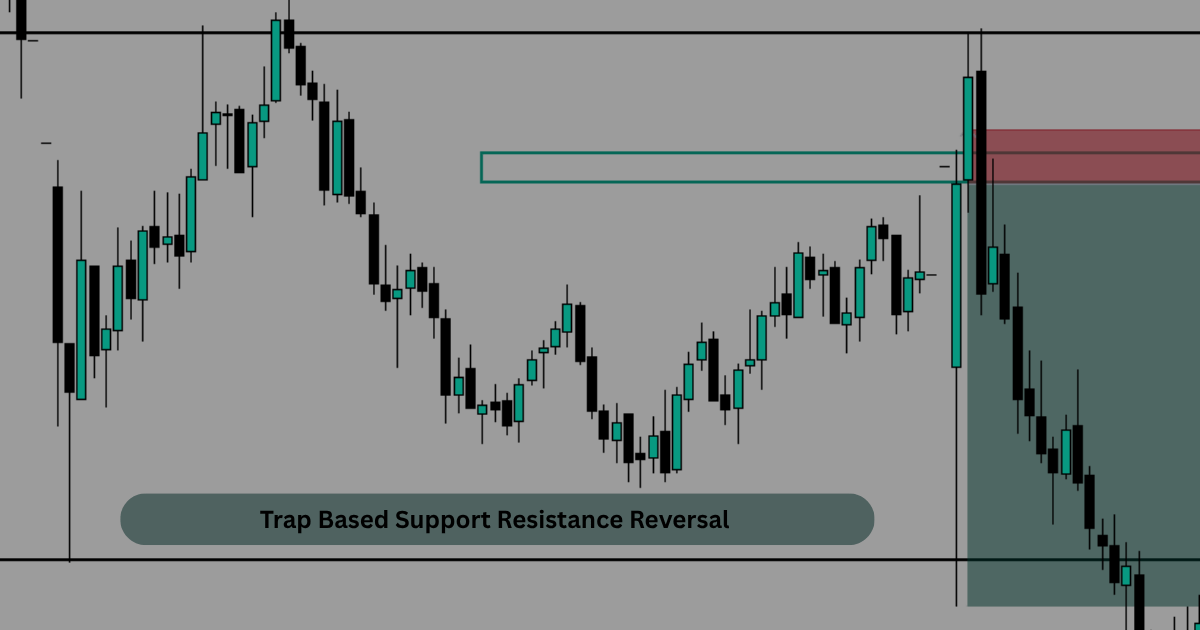
One such powerful price action strategy is the Trap Based Support and Resistance Reversal Strategy. This setup is based on a simple but highly effective concept: Market Trapping. With trap there is also Price Action in picture.
The strategy focuses on identifying areas where traders get trapped after a breakout or breakdown. Instead of joining the crowd, traders wait for confirmation of a trap and then take positions in the opposite direction.
When combined with strong support and resistance levels, this approach can produce excellent risk-reward opportunities in Nifty, Bank Nifty, and other liquid indices.
The Core Concept Behind The Trap Based Support and Resistance Reversal Strategy
The market often creates false breakouts and false breakdowns.
Imagine a candle closes below the low of the previous candle. Many traders immediately assume that the market is becoming bearish and rush to buy Put Options.
Similarly, when a candle closes above the high of the previous candle, many traders assume that a bullish breakout has occurred and rush to buy Call Options.
In many cases, the market does exactly the opposite.
Instead of continuing in the breakout direction, the market reverses sharply and traps those traders.
This strategy is designed to identify these traps and capitalize on them.
The goal is not to trade the breakout.
The goal is to trade the failure of the breakout.
Step 1: Mark the Day High and Day Low
Before looking for any setup, mark previous and current:
- Day High
- Day Low
These levels are important because they often act as liquidity zones where large market participants operate.
The best setups frequently develop around these areas.
Step 2: Identify the Trigger Candle
Look for a candle that:
For Potential Day High Formation
A candle closes below the low of the previous candle.
This indicates that many traders may believe the market is turning bearish.
For Potential Day Low Formation
A candle closes above the high of the previous candle.
This indicates that many traders may believe the market is turning bullish.
This candle becomes the foundation of the setup.
Step 3: Understand the Trap
Most retail traders are trained to trade breakouts.
Therefore:
- Closing below a previous candle’s low attracts sellers and Put buyers.
- Closing above a previous candle’s high attracts buyers and Call buyers.
The market frequently uses these moves to create liquidity.
Once enough traders enter, price reverses and starts moving in the opposite direction.
This is where the Trap Based Support and Resistance Reversal Strategy comes into action.
The strategy is not trading the breakout.
The strategy is trading the failure of the breakout.
Step 4: Use Strong Support and Resistance
This is the most important rule.
Never trade this setup at random locations.
The setup works best when it forms near:
- Major Support Levels
- Major Resistance Levels
- Previous Day High
- Previous Day Low
- Weekly Highs and Lows
- Important Supply Zones
- Important Demand Zones
These areas already have a high probability of reversal.
The setup simply provides an entry trigger.
Step 5: Avoid Live Support and Resistance
Many traders ignore this rule and lose money.
If the market has already created a fresh support or resistance level on same day or in live market before the setup appears, avoid taking the trade.
Why?
Because the market may reverse from that newly created level instead.
Always ensure that the setup is occurring at a clean and significant support or resistance zone.
Step 6: Draw the Setup Box
Once the trigger candle is identified:
Bullish Reversal Setup
Draw a box around the wick and range near the low area where the trap occurred.
Bearish Reversal Setup
Draw a box around the wick and range near the high area where the trap occurred.
This box becomes your decision zone.
Step 7: Entry Rules
Bullish Setup
Conditions:
- Setup forms near strong support.
- Market traps sellers.
- Price starts moving back above the setup zone.
Entry:
- Buy Call Option.
- Aggressive traders can enter on the confirmation candle.
- Conservative traders can wait for additional confirmation.
Bearish Setup
Conditions:
- Setup forms near strong resistance.
- Market traps buyers.
- Price starts moving back below the setup zone.
Entry:
- Buy Put Option.
- Enter only after confirmation.
Also Read: What Is AI Trading? A Simple Guide for Beginners.
Step 8: Stop Loss Placement
One of the biggest advantages of this Trap Based Support and Resistance Reversal strategy is its small stop loss.
Bullish Trade
Place the stop loss below the setup box.
Bearish Trade
Place the stop loss above the setup box.
Never trade without a stop loss.
A setup can fail, and protecting capital is more important than making profits.
Step 9: Target Selection
Targets should never be random.
Use:
- Previous Swing Highs
- Previous Swing Lows
- Major Support Levels
- Major Resistance Levels
- Market Structure
Because stop losses are usually small, even moderate moves can generate excellent rewards.
Typical risk-reward ratios can range from:
- 1:2
- 1:3
- 1:5
- Sometimes even higher
This is one of the strongest advantages of this Trap Based Support and Resistance Reversal strategy.
Why This Trap Based Support and Resistance Reversal Strategy Works
The market moves because of order flow and liquidity.
Most traders chase breakouts.
Professional traders understand where the crowd is likely to enter.
This strategy attempts to identify situations where:
- Retail traders enter aggressively.
- The market absorbs those positions.
- Price reverses sharply.
- Trapped traders fuel the move in the opposite direction.
This combination creates powerful directional opportunities.
Risk Management Rules
Even the best setup in the world cannot guarantee profits.
Always remember:
- Never risk more than a small percentage of your capital on a single trade.
- Always use a stop loss.
- Avoid overtrading.
- Do not trade every setup.
- Trade only at strong support and resistance levels.
- Follow position sizing rules.
- Maintain a trading journal.
- Focus on process rather than profit.
Common Mistakes Traders Make
Trading at Random Levels
The setup loses effectiveness when traded away from key support and resistance zones.
Ignoring Stop Loss
A good setup with poor risk management can still result in losses.
Chasing Entries
Wait for proper confirmation.
Overconfidence
No setup has a 100% win rate.
Ignoring Market Structure
Always consider the larger trend and surrounding price action.
Final Thoughts
The Trap Based Support and Resistance Reversal Strategy is not just another candlestick pattern. It is a trader-trapping price action concept designed to identify potential reversals near important support and resistance levels.
Its biggest strengths are:
- Clear entry logic
- Small stop loss
- Excellent risk-reward potential
- Works well in Nifty and Bank Nifty
- Based on price action rather than indicators
However, success comes from disciplined execution, proper risk management, and patience. Traders who learn to identify traps and wait for high-quality setups often find themselves on the right side of major market moves.
Remember: The goal is not to trade more. The goal is to trade better.
Trade with discipline, protect your capital, and let the probabilities work in your favor.